Le Pari de Pascal, Nasdaq Edition
What would Blaise Pascal think about the latest addition to the Nasdaq?
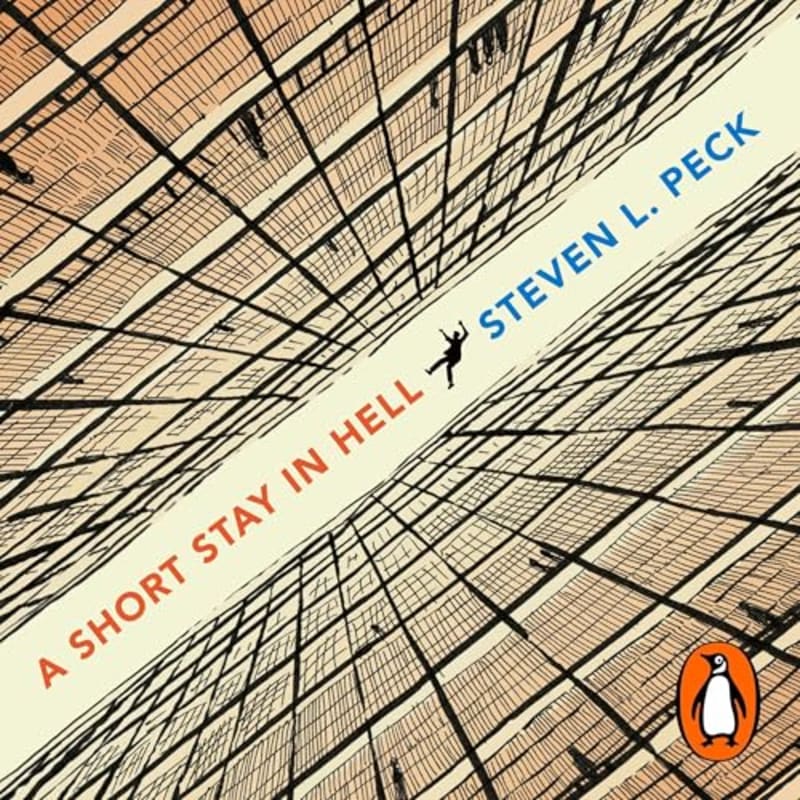
Let's start with hell. Thanks to some wonderful reading recommendations from my wonderful brother, I recently read A Short Stay in Hell by Steven L. Peck. Minor spoilers, so be careful if you plan to read it: a Mormon dies, full of confidence about what comes after life, and wakes up to learn that the correct religion was, in fact, Zoroastrianism.
Wrong god. Wasted prayers. Off to hell. And with a clever inspiration from The Library of Babel, the author brings us to a place where the finite and the infinite are flirting with each other. And the big numbers that our human mind can’t really grasp make you think twice before wishing an eternity of damnation on your biggest enemy again.
But what’s genuinely interesting about that book is the idea that the protagonist was in fact a huge believer in his life. He made his bet in good faith, and the punishment for picking the wrong god turned out to be the same as if he'd picked none.
Nearly four hundred years ago, Blaise Pascal was already treating that question as a bet. In a world where no one can prove that God(s) exists, Pascal laid it out as a wager with four outcomes.
- Believe, and you’re right: infinite reward, an eternity in Heaven
- Believe, and you’re wrong: you’ve lost a few Sunday mornings
- Don’t believe, and you’re wrong: infinite loss, an eternity in Hell
- Don’t believe, and you’re right: you got your Sundays back. A small, survivable stake against an infinite payoff, that’s what Pascal believes.
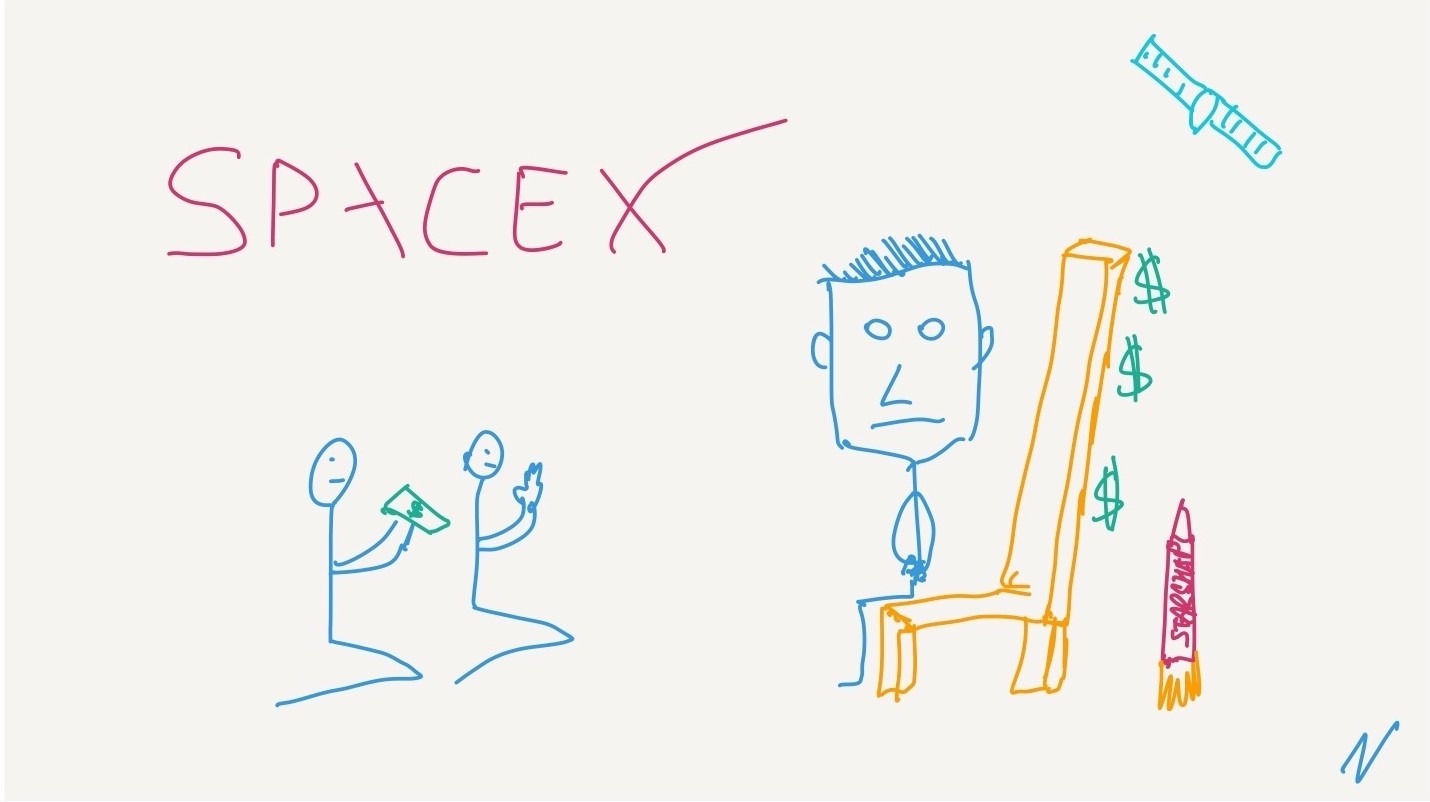
Last issue, I told you about the siren in the sky. Some of you didn’t agree with my personification of the Moon, and personally I don’t really care, but here is the news: the Moon is charming sailors toward the depths, and a sailing company just went public: SpaceX IPO’ed yesterday. By the time you read this, it has been the most valuable market debut in human history for about 24 hours.
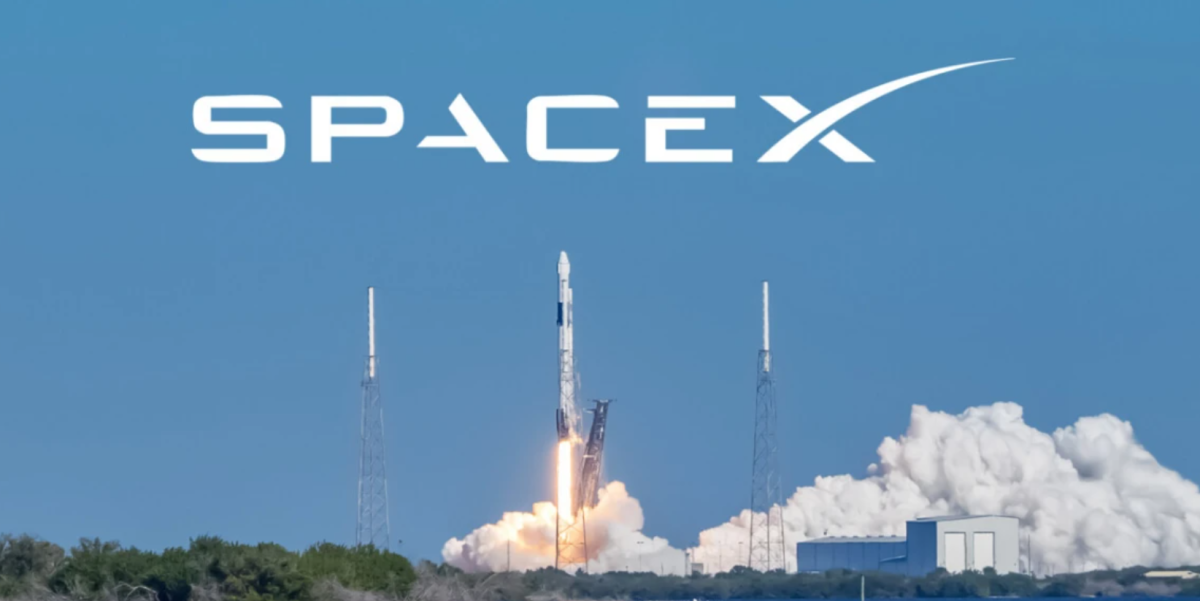
What is interesting is that the price cannot be justified by what SpaceX is today. SpaceX is a three-faced company right now and the only money-machine part is Starlink. The two other faces, sending Starships in space and turning Grok into Mecha Hitler, are burning cash and rocket kerosene.
What you're buying at $135 a share (price at the IPO) is not backed by any rational analysis of the company’s current state. It's a dream: Mars, the lunar gas station, a planet wrapped in satellites, space data centres with solar panels. You're believing. Pascal would have recognized the structure instantly: infinite payoff, just believe. He would probably have signed with both hands.
But there is a famous hole in Pascal’s logic, and it’s exactly the start of A Short Stay in Hell: there is not one God. Believing is not enough, you have to believe in the right one. So the real question at $135 a share (more like $160 right now) was never believe or don't. Very few people dispute that the future is rockets, satellites, and machine intelligence. The bet is on which vehicle gets you there.
Without going into details, nor giving financial advice, what is interesting here is that sometimes, the wager isn’t even yours to make.
Blaise Pascal famously said vous êtes embarqué (you’re already aboard) when writing about whether or not you have to wager during your life. By securing a spot in the Nasdaq from the start, Elon Musk is silently selling shares to people who haven’t asked for them. He’s not asking you to believe in his Mars project, he’s forcing funds that track the Nasdaq-100, Russell, and MSCI indices to become buyers within weeks. Millions of savers are about to become passengers on his rocket (and rockets sometimes explode). Not because they believed, but because someone else placed the wager for them.
After all, maybe he is not the right god to worship and all his believers will still end up in Hell. So far, the market has welcomed the newcomer warmly.
Mars doesn't need to happen, the way the Moon never needed to improve the wine. The belief alone moves the world. The siren doesn't even have to sing anymore, she just filed the SEC paperwork.