The Siren in the Sky
The Moon, lurking in the dark, on the far end of human's kingdom.
It shouldn't be news to you, but humanity has reached for the sky again. On April 1st, four astronauts left Earth aboard the Orion spacecraft and flew around the moon. The first humans to travel there since Apollo 17, 54 years ago. They went further than any human has ever been: 252,756 miles from Earth. To help you visualize, it's roughly 46 times the distance between Solre-Saint-Géry and San Francisco, or 667 million Manneken Pis stacked on top of each other. Hope that helps.
But why? Why spend billions sending four people around a rock when satellites can photograph every crater from orbit? Olivier Hamant, the biologist from Topic 1, has a line that fits perfectly here: when humans can, they do. The capacity becomes the imperative. Going to the Moon because we can is peak performance logic. This is mainly a geopolitical statement. The US and China are racing to establish a lunar base, and whoever controls the Moon's resources might have a good shot at the next chapter.
It seems like a perfect time to discuss the Moon, its impact on us, both physically and psychologically. From building rocket fuel space stations to ruined bottles of piquette, let's dive into what I'd call The Siren in the Sky.
You've heard the ideas: a lunar base, experiments in low gravity, learning to live off-Earth. There's nothing on the Moon we can't find on Earth, and even if there were, the cost of sending extraction equipment up and processed materials back down is brutal.
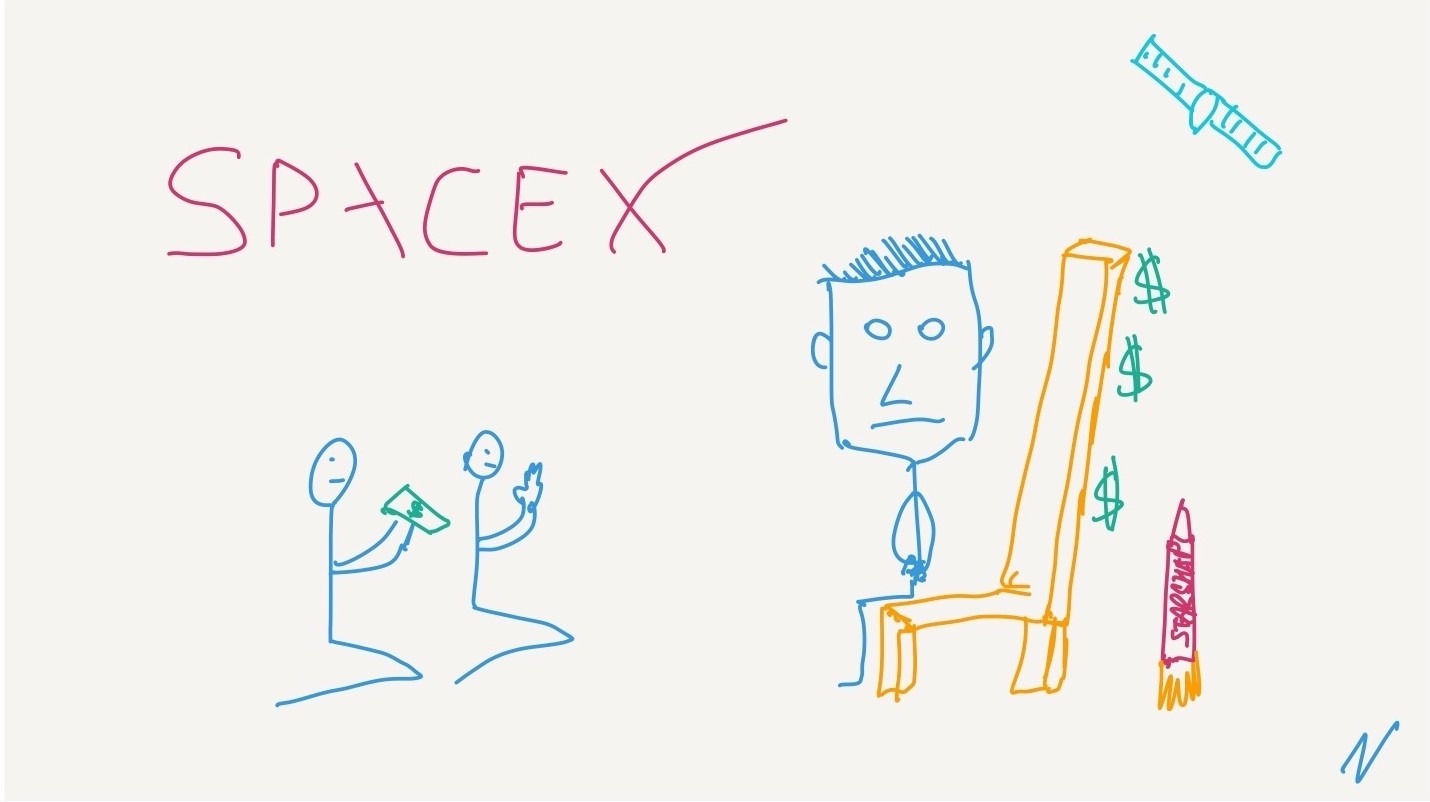
What isn't science fiction is how SpaceX sees the Moon as a gas station. Water ice locked in the deep craters at the lunar poles can be split into hydrogen, oxygen and thus rocket fuel. Instead of carrying tons of fuel out of the Earth's strong gravitational field, you launch light, reach the Moon, and do a quick stop at the Esso gas station for a refill. That's the thesis. Bezos goes even further: he wants to move heavy industry off Earth entirely, sparing the planet the pollution, and using a slingshot to send the processed materials back down to the ocean. Beautiful idea. Yet, pure sci-fi for now.
Your whole life, you've probably thought that the Moon is a chill guy, here to help, minding its own business out there. That's what it wants you to think.
The Moon is tidally locked. We always see the same face. The far side wasn't seen until the Soviets photographed it in 1959. NASA describes it "like a dancer circling but always facing her partner". I'm not buying it. I've played enough video games to not trust anyone who doesn't trust me enough to show me their back.
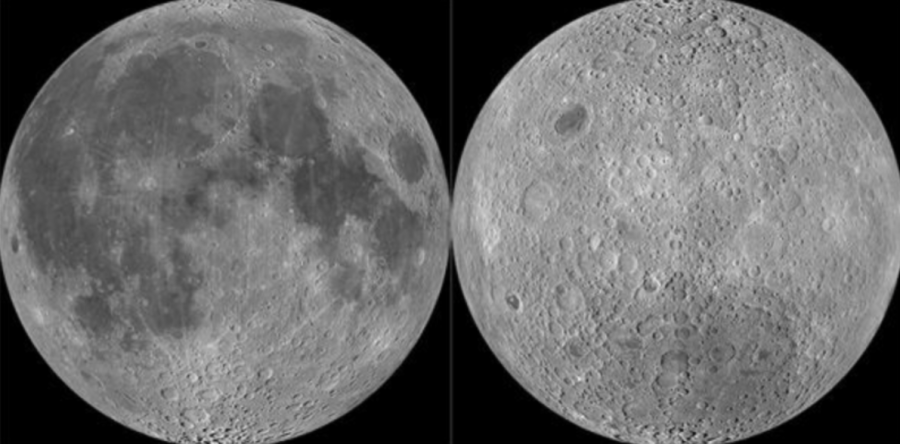
It's out there, visible every night, showing its good side, inviting us to leave our planet. Like a siren charming sailors toward the depths. You think it shines to help us navigate without the sun? That siren is stealing the sun's light, taking all the credit, and circling us like a predator lurking around its prey.
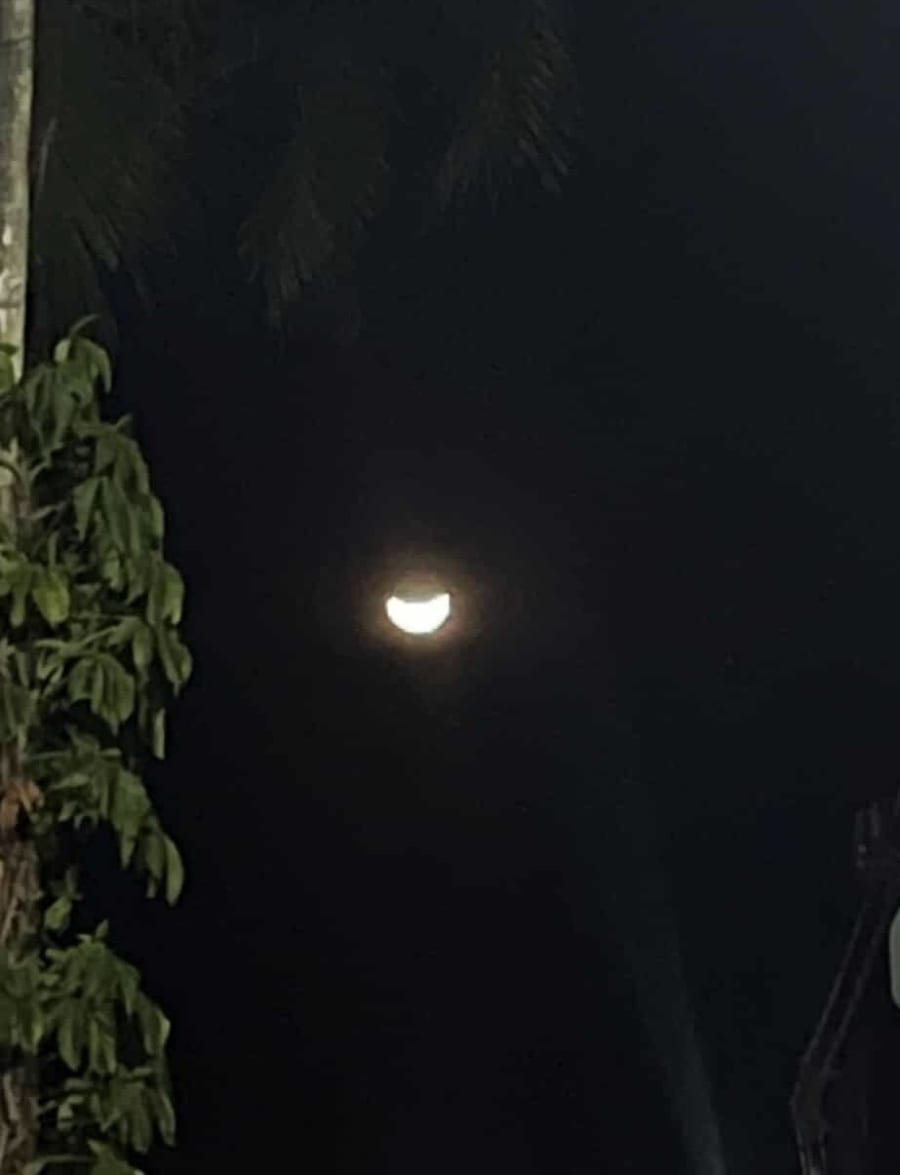
Before we get too paranoid: yes, the Moon creates the Earth's tides, which drive nutrient cycles in the oceans and shaped the evolution of life for billions of years. It stabilizes Earth's axial tilt and without that natural satellite, seasons would swing wildly, winds would be stronger and days would be shorter. I'll give it that. Nevertheless, I don't trust it.
I can't close this moon topic without debunking something my dad once told me.
One day, around a meaty barbecue, my dad said the reason our second bottle of Dame de Gaffelière didn't taste as good as the first one we'd had a few weeks earlier was because we were drinking it on a root day. Me and Victor made fun of him. The conversation drifted. But the mystery stuck with me, and I ended up looking into it.
Let's start with what we know. The Moon has a proven gravitational effect on tides and bodies of water. From there, biodynamic winemakers have built an entire farming philosophy around the Moon. It goes back to Rudolf Steiner in 1924: all vineyard work follows the lunar calendar. Plowing during the descending phase, harvesting during the ascending phase. Days are classified as root, flower, leaf or fruit depending on which zodiac sign the Moon sits in. Fruit days are supposedly the best for picking grapes. Root days, the worst for tasting wine. That bottle of Dame de Gaffelière, apparently, was a victim of a root day.
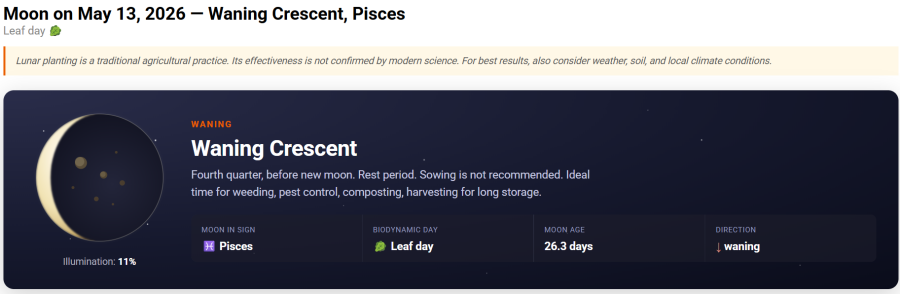
The natural assumption is gravity: the Moon pulls sap upward or downward through the vine, the way it pulls ocean water. And it also pulls the aroma out of the wine glass when you drink it. My dad's explanation, essentially.
The problem is that the physics don't support it. The Moon's gravitational pull on a two-meter vine is about 300,000 times weaker than Earth's own gravity — a force so small it's physically imperceptible. A 2023 study published in Nature tracked 62 trees across six species using precision instruments and found zero lunar cycle in sap flow. None. The variations were driven entirely by temperature and humidity. A broader review from 2020 went further: no reliable scientific evidence exists for any relationship between lunar phases and plant physiology. Not in textbooks, not in peer-reviewed journals. Only in dad-approved catalogs, apparently.
So the vine probably doesn't care what the Moon is doing. And the glass of wine on my barbecue table? The tidal force the Moon exerts on a sip of Côtes du Rhône is on the order of a trillionth of a Newton. Yes, I know it's pretty hard to relate, so let me give you a comparison: the force of gravity between you and your phone charging one meter away from your bed is stronger than that. That force is incomparably weaker than the surface tension already holding the liquid together. The Moon, 384,400 km away, is not reshaping my Saturday evening drink.
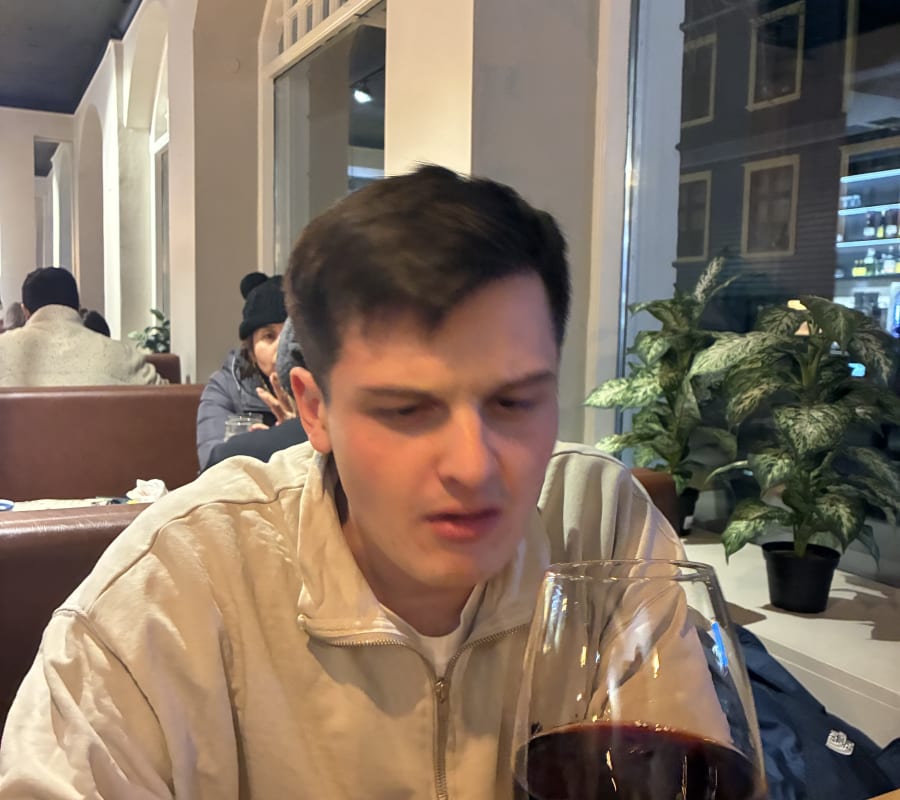
And yet. Biodynamic vineyards produce some of the best wine in the world. Some sommeliers refuse to schedule tastings on root days. Producers like Nicolas Joly in the Loire Valley won't open a bottle on one. Maybe the Moon isn't doing the work. But believing it does make the winemaker pay closer attention, follow a rhythm, stay connected to the land. The discipline of the calendar might be the real ingredient.
The siren strikes again. The Moon is not pulling the sap or flavoring the wine. It is pulling our attention.
I've had it on my phone wallpaper for over a year. I never thought much about it. Turns out, the Moon had already gotten to me.