Go Slow Before You Go Fast
What training for a marathon has in common with today's global optimization for performance.
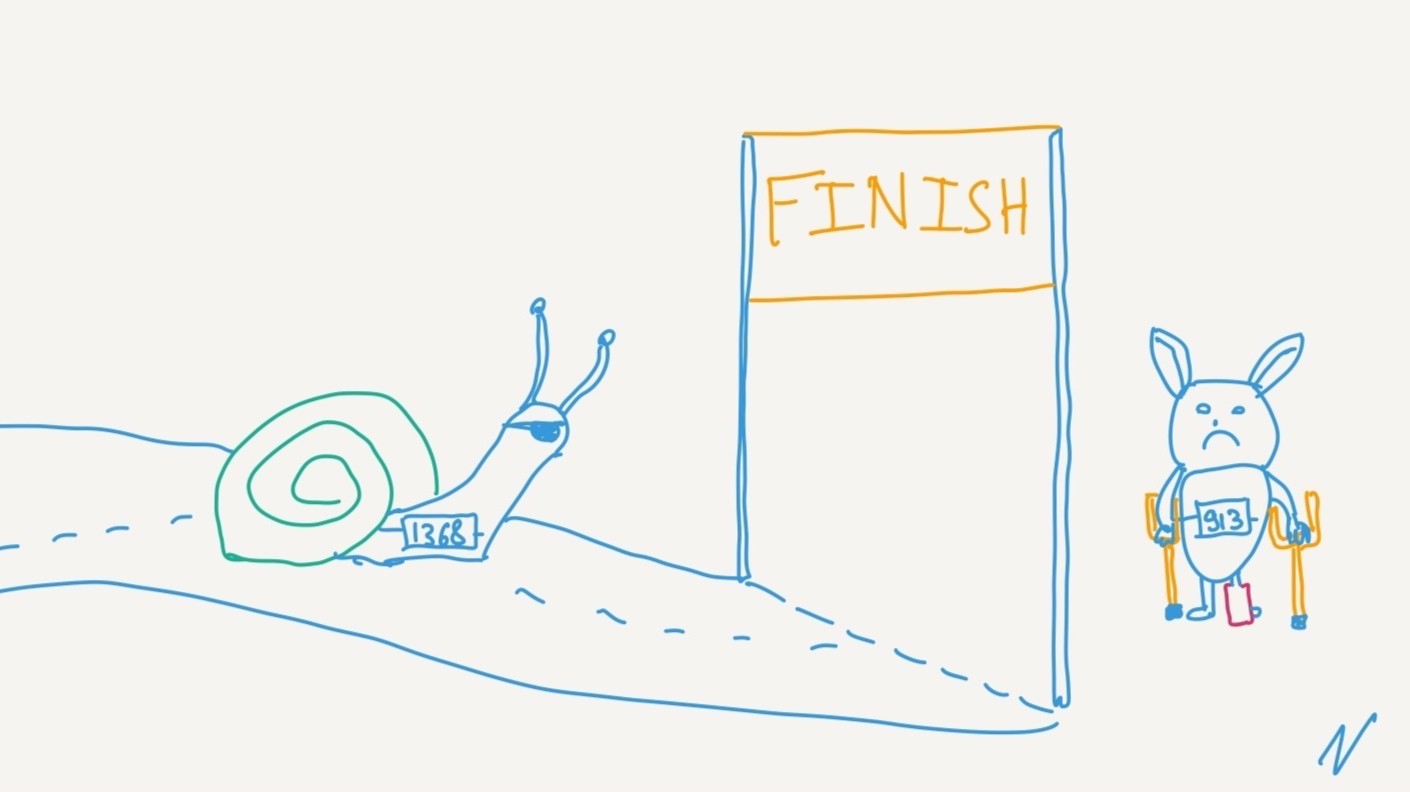
A couple of months ago, I started training for my first marathon. AI helped me come up with a training plan, and my physiotherapist gave me some advice. But something was off. I am following a bunch of my friends on Strava, and seeing their stats made me feel like I wasn't progressing much. My plan was telling me to run at a 6:45 – 7:00 pace. I felt like I was able to go faster. So why wouldn't I? Why stay in my comfort zone when I could push harder, earn my sweat, deserve my after-exercise dinner and feel the pain the next morning?
It took me a few weeks to understand that the plan wasn't broken. My vision of training was. The fact that I could go faster didn't mean I should. I was wrong about what "training" should feel like, and what progress looked like. Progress isn't running 2min faster on my 5k right now. Progress was staying constantly under 160 BPM throughout those 12km runs on Saturdays. Progress was now being able to hold a conversation at low speed, not beat Jojo in a sprint. (couldn't do either)
Here is what most recreational runners do: they put their shoes on, go out, and run at a pace that feels "right". They don't want it to be easy, but they don't want it to be hard either. They want to be comfortably uncomfortable. This has been the focus of many studies, and is called by scientists the "black hole" of training. Too hard for your body, and too easy to trigger improvement. Yes, you're tired when you come back home and yes, you feel it in your legs the next morning. But you're just grinding in no-man's-land.
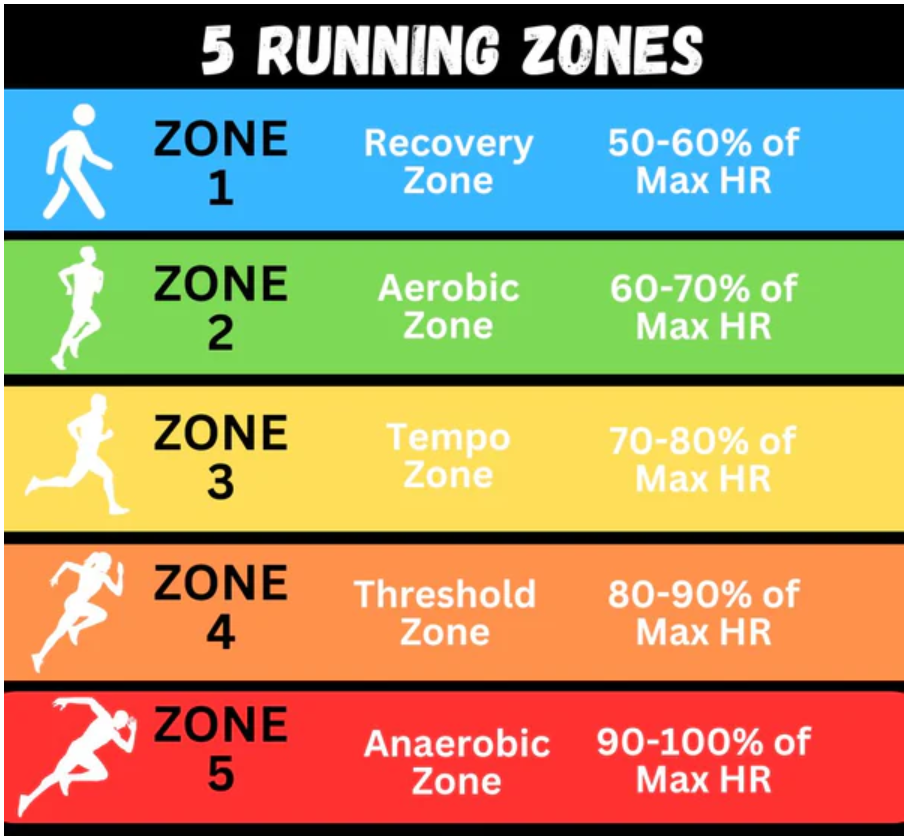
Elite endurance athletes follow what's called the polarized model: roughly 80% of their volume at very low intensity (Zone 2), at a pace so easy it feels like you're not training anything, and 20% at very high intensity. Almost nothing in between. At that pace, your body quietly builds more mitochondria, burns fat more efficiently, and strengthens the heart. Not aiming for performance, but building a foundation.
No, Pareto didn't come up with that rule.
But if the best athletes in the world have known this for decades, why does it feel so counterintuitive? Why does every bone in my body resist the idea that less effort leads to better results down the line? Turns out, a French biologist has been reflecting on that exact tension, but in how living systems survive.
For 10,000 years, humanity has lived in a stable world. Stable climate and predictable patterns. We built a civilization on performance, interested in optimizing, maximizing and controlling.
But that world is drifting away. We're leaving the world of averages and entering a world of standard deviations. Variations dominate. The question isn't how high you can peak, but how well you can absorb shocks.
Living systems have already figured that out. They mostly don't optimize for performance; they optimize for robustness. Redundancy. Slowness. Apparent inefficiency. These aren't bugs. They are the main reasons biology has survived for billions of years while our hyper-optimized supply chains collapse when one ship gets stuck in a canal.
Plants waste 99% of solar energy during photosynthesis. It's 15 times less effective than solar panels. Yet, in 3.8 billion years, there's been zero traces of optimization. It's precisely because they're not optimizing energy yield that they're still around. They can withstand variations in light and temperature. With solar panel-equivalent efficiency, they would catch fire. By "wasting" 99% of the energy, the plant keeps a massive margin of safety to absorb fluctuations between day and night, seasons, cloud cover, everything.

Zone 2 training is Hamant's thesis but applied to the body. When I run at 6:45 and my ego protests, what I'm doing is building robustness and leaving performance on the side of the road. Not training for today's run. Building a system that can handle whatever the marathon in October throws at me, whether it's heat, wind, a bad night's sleep, dad's lentils, or a wrong step on a paved road.
The athlete who peaked too early, who trained too hard, who optimized for performance over robustness, that's the one who breaks.
So now I know that if the plan says slow down, I slow down! If life says prepare for later, I don't rush. I increase my resistance to variations.
The race is in five months. I'll let you know how the fluctuations went.