The Suspended Suspension
If you weren’t aware, there is a niche sport competition happening right now.
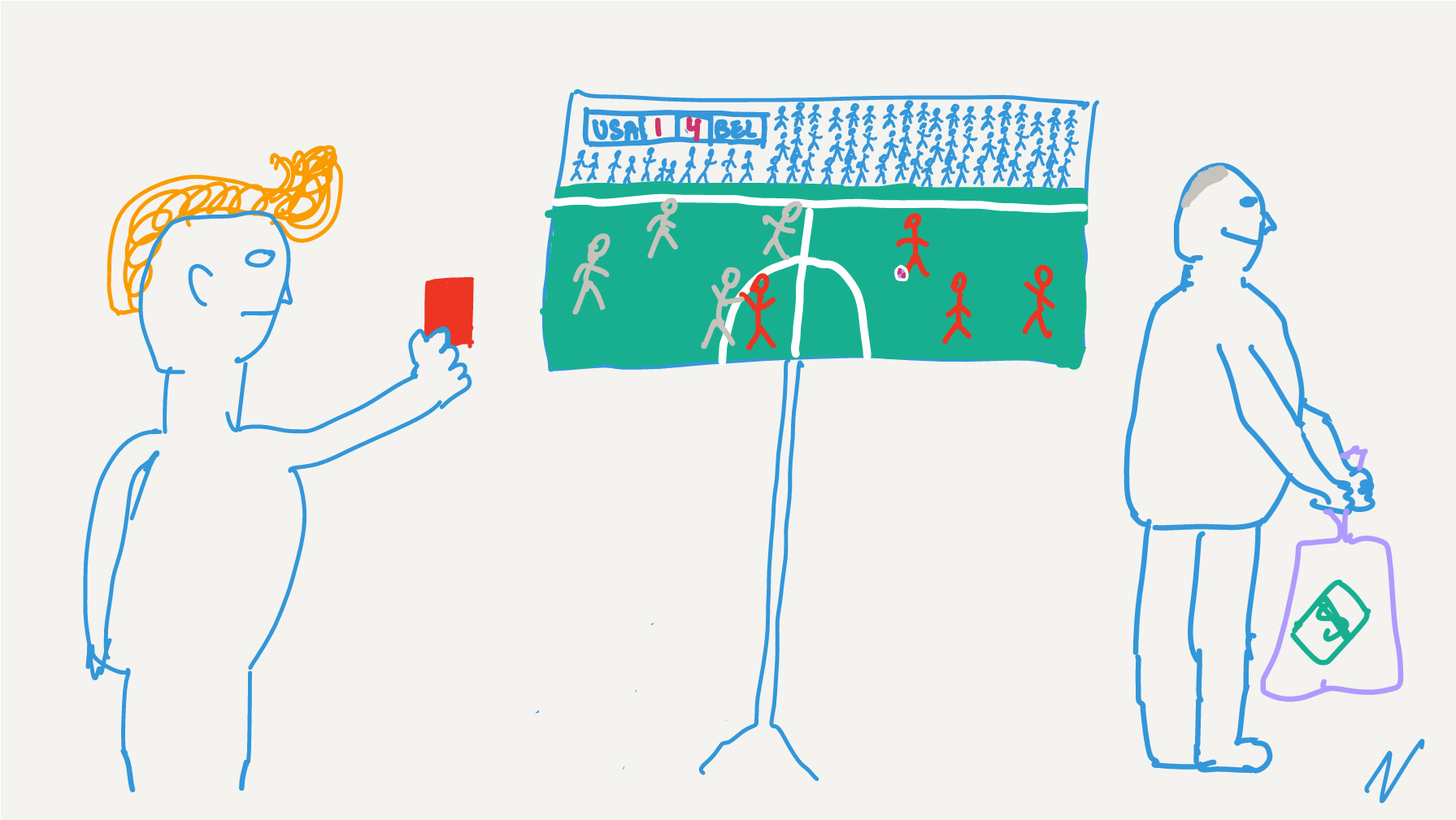
For diligent football fans, you’ve already been discussing this very subject with your friends for the last 10 days. For the others, let me introduce you to what the incorruptible FIFA came up with before the Belgium vs United States round of 16 game.
On July 1st, USA played, and won, against Bosnia, earning their spot for the next round, and facing for the first time in their World Cup run, a football nation. During the first part of the second half, USA's starting striker, Balogun, committed a foul on a defender and received a red card, after intervention from the VAR. Was it harsh? Maybe. The rules state that a player who receives a red card is automatically suspended for the next game.
But between two failed negotiations with Iran, and surrounded by his peeps at the White House, the president of the USA apparently didn’t agree with the referee’s decision, and called the president of FIFA, Gianni Infantino, asking for a review and stating later that “all [he] did was ask for a review because [he] didn’t think it was a foul”.
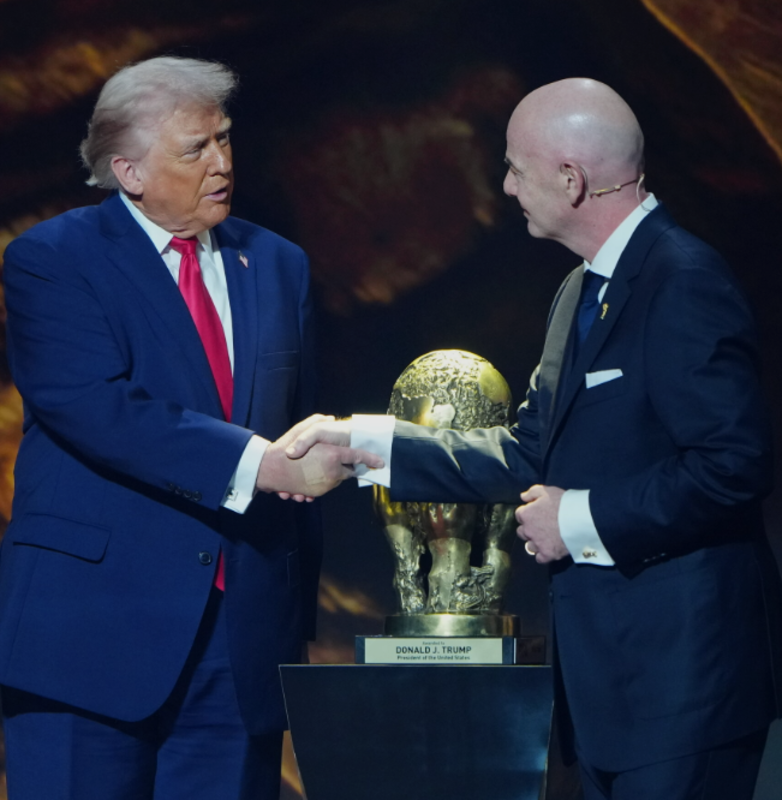
On one hand, the decision of Raphael Claus, “one of the world’s leading professional referees” according to FIFA, alongside the assistants, the VAR referees and everyone involved in the officiating team. On the other hand, the intuition of a man who admitted he “didn't know what the hell a red card was". And the International Federation of Association Football decided to turn the one-game suspension into a one-year probation period and a light fine. To be clear, they didn’t cancel the suspension, they suspended its implementation. The red card still exists, but the rulebook punishment doesn’t.
One phone call, that’s all it takes for Donald Trump to change the rules to help his national team compete in the World Cup.
Everyone obviously lost their minds. UEFA jumped on the occasion to flame FIFA, calling it a decision that “crossed a red line” and was "unprecedented". Even Sepp Blatter, who left FIFA in the middle of a corruption scandal, called Infantino out saying that red cards are overturned by rules and evidence, not phone calls.
The Royal Belgian Football Association says it never even filed an appeal: it asked FIFA for information about the decision. FIFA received the questions, interpreted them as an appeal, provided no information whatsoever, then rejected the appeal it had just invented. It said Belgium was “not a party to the proceedings”. The team that had to face Balogun the next day had no standing to ask whether he could play.
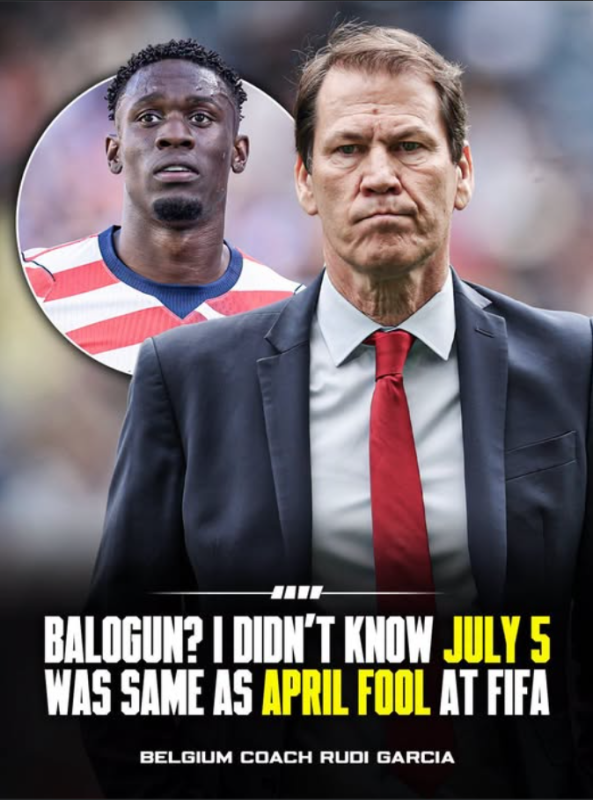
Rules only work when they apply to everyone. And with that precedent, I fear that some federations will now understand what the appeal process and exception look like. And they are not written in any rulebook, they’re affected by power and politics.
FIFA already showed us that money could buy a tournament during the 2022 Qatar World Cup, which was awarded by that same Blatter in 2010. But apparently you can now buy or impact the rules themselves with a friendly phone call and a tap on the shoulder.
While it created an awful precedent, showed us once more that some people are corrupt, and that politics and sports are mixed up, it still had two upsides.
Firstly, this might spare us from another presidential term for Infantino. Theoretically, the election is already decided, and enough federations have committed to vote for him once more, which should give him enough votes to win for a fourth time in a row. Maybe this event will change the outcome.
And secondly, it gave Belgium a free win. You can’t lose when you have the whole football world on your side, fighting the US villains with fully wound-up Red Devils.
90 minutes, 4-1, and Belgium was heading to the quarter-finals against Spain.
When a red card stops being a red card, football starts to lose its place as the biggest sport in the world.